Download Free Radio

A Free Numerology

(Free numerology reading from Affinity)
Showing posts with label Its All About Kolar Gold Fields. Show all posts

Tuesday, 9 September 2008

Tennants shaft


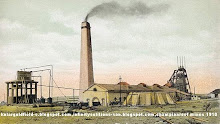
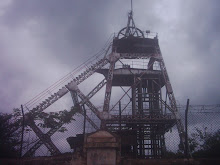
The shaft is Tennants which is located in champion reef kolar gold fields.
The above photo shows the shaft, you can also see the ad mine office and fire emergency room which is completely destroyed. I have been there when I was 15 my father was working in tenants it was beautiful to see. I have seen many shafts in kgf because my Dad had worked in many shafts and I had a chance to see.

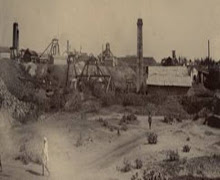
The 1st photo is Tennants shaft.
The 2nd photo is Tennants complex board.
The 3rd photo is Tennants complex campus.
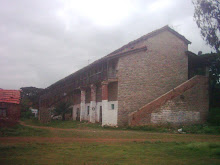
The 4th and 5th photo is Tennants shaft Fire emergency room with busses.

The Photo by santhosh P kumar on 07 August 2008

BY
santhosh

Kolar gold field Battalion from 1903 to 1947


A few scarce badges fall into this category. Although arguably these could be better classed as items of "militaria" they never the less have a strong mining connection. The bulk of this badge grouping comprises cap or "sweat heart" badges issued to/by men serving in the various Sappers & Miners or Tunneling companies of the Royal Engineers Corps. during the Great War of 1914-18. During the First World War miners from all over the United Kingdom were drafted into the Royal Engineers in huge numbers to form special "Tunneling" or "Mining" companies. These companies were involved in the comparatively little known but highly important work of under mining and then exploding huge charges below the enemy trenches. German miners were similarly employed on their own side of the trenches and there are many accounts of miners from both sides engaging in under ground hand to hand fighting on those occasions when their tunnels accidentally met.
The rare cap badge illustrated above is from a very obscure British Empire unit (The Kolar Gold Field Battalion - in service from 1903 to 1947) formed presumably from British expatriates and local miners who worked in the lucrative mines of the Kolar Gold Fields near Bangalore, Southern India.
By
santhosh

Monday, 8 September 2008

Community-managed water initiative

xserProject:

Since 2006, with an initial grant from the Jersey Overseas Aid Commission, Homeless International has been able to support the Indian Alliance in piloting a community-managed water initiative in the town of Kolar Gold Field in the State of Karnataka, India. The scheme involves the design, building and management of a water pumping system by slum dwellers themselves.

Once one of the biggest mines in the world, the Kolar Gold Field mine closed in 2001 due to depleted deposits and inefficient extraction. As a result, unemployment and poverty is rife among the residents of the area, with the worst affected being the slum areas, where over 70,000 poor people live. The mining company used to provide water to the slum settlements but with the closure of the mine, the service was cut off. Water from the Karnataka City Water Supply Board is only being supplied once every 10 to 15 days, and residents have therefore been forced to buy water from passing tankers, which is costly.

The water initiative, which is expected to supply safe drinking water to over 25,000 people when complete, is also helping to create jobs for community members who are being employed to manage and maintain it. The costs of maintenance and management are being covered by small contributions from each family in the community, which amount to much less than they currently pay for water supplied privately from the passing tankers. The management and organisational requirements of the scheme are also building the community’s confidence and capacity and will stand them in good stead to address other challenges that they face, such as limited sanitation facilities.

So far, two borewells have been sunk in the Nagavaram Valley area and another in a settlement known as Gilbert’s Area. These wells are being connected by pipes to an existing small pumping station, which has been renovated. A more powerful water pump has been installed in another area of Kolar Gold Field to transfer water to a larger storage tank where the water is purified and then supplied to the surrounding slum settlements.

The municipal authorities in Kolar Gold Field, whilst not in a position to solve the problem of water supply themselves due to lack of resources, are fully supportive of this community-driven initiative. Using this project to set a precedent, the Indian Alliance hopes to encourage the municipal authorities to draw down State-level funds for similar schemes in the future.

Report by Homeless International

By
santhosh

Sunday, 7 September 2008

The Mc Tag’s Incline Shaft.


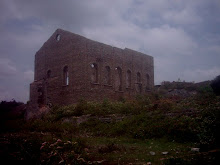
The above Photographs are Mysore mines Mc Tag’s Incline Shaft. Which is located in Marikuppam at kolar gold fields, Karnataka state, INDIA?
Opposite to Marikuppam Railway station.

# the photo no zero is Mc Tag's gold mines shaft.
# the first Photo is Mc Tag’s incline Shaft.
# Second photo is Mc Tag’s incline shafts Engine room which is closed state and full of bushes covered.
# Third Photo is inside view of the shaft, which is covered by bushes.
# Fourth photo is Administrative block which is destroyed.
# Fifth photo is Employees canteen which is destroyed and covered with bushes.
# Securities guards for closed Mc Tag’s Incline Shaft.
Guards from
Left is Mr. Srinivas,
Center Mr. Krishna and
Right Mr. Ravi

The bike is mine. The bike Model is TVS Star City.
Photo by Santhosh P kumar


By
SANTHOSH

Railway Arch


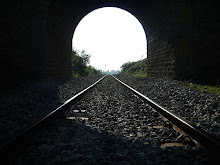
A beauty ful railway Arch in Kolar gold Fields
Photo by Benny Thomas
by
santhosh

Saturday, 6 September 2008

Oldest Railway Bridge


Oldest Railway Bridge which was built during the time of Britesh.


Photo by Benny Thomas


By

Santhosh

The Beautyfull Deers of Kolar Gold Fields


The beautyfull DEERS in Kolar gold fields.


Photo dy Mr.Benny Thomas.


By

santhosh

Death of a mine

With the closure of Bharat Gold Mines Limited now a reality, the livelihood concerns of its 3,800-strong workforce come to the fore.

PARVATHI MENON
in Kolar Gold Fields

AT least 5,000 commuters pack the morning Surana Express train from Kolar Gold Fields (KGF) to Bangalore each day. A majority of them are employees of Bharat Gold Mines Ltd who have been out of work ever since the BGML management declared its closure in April 2000, and stopped paying wages from March 2001. This decision led to the swift descent into poverty of a majority of the 3,800-strong workforce and their families, the overwhelming majority of whom are from Scheduled Caste and Scheduled Tribe backgrounds. The workers, fourth generation miners who operated Asia's largest and deepest gold mine, now travel to Bangalore each day to seek work as construction labourers, head load workers, watchmen, waiters...

S. Ganesh, an underground worker in the Mysore Mines, works as a mason at Rs.80 a day, hardly enough to maintain his family comprising his wife and three children. He has pawned his belongings of value and has accumulated debts of Rs. 30,000.

Workers of Bharat Gold Mines Ltd, and their families, take out a rally in Bangalore demanding alternative jobs.

S. George, a worker for 22 years in the central BGML workshop, has ten family members including seven children between the ages of seven and 19. "I have been working off and on as a security guard, but the wages are even lower than the Rs.2,000 I used to take home as a BGML worker. I am now in debt for Rs.80,000," he said. "Our condition is desperate. We eat two instead of three meals a day and we don't know how we are going to survive," he says.

Many of the workers are deeply in debt. "Even the seth (moneylender) now says he has no money to give us," M. Kavita, an employee's wife said. She and her husband M. Kirubakaran pawned their valuables for Rs.15,000 and have accumulated loans amounting to Rs.20,000. They have taken to selling vegetables from their house. "We are lucky if we make ten or fifteen rupees a day from this," Kavita said.

Even though the Karnataka High Courthas not taken a final decision on the company's fate, there is a deep and perceptible sense of despondency and loss of hope amongst the workforce, reflected in the talk of mounting debts, starvation, death and suicide. "Several workers have died since the closure, owing to ill-health and lack of medical care, and in a few cases they have committed suicide," S. Shekharan, a miner for 23 years, said. "My family survives thanks to my brothers and sisters in Bangalore who help us." This correspondent went to the home of P. Pushparaj, a worker who hanged himself two months ago. The small hut was locked as his wife and daughter were away in Bangalore for the day. Neighbours said that Pushparaj left a suicide note in which he stated that the company's closure, which led to his personal difficulties, was the reason for his taking the drastic step.

Francis Kumar, 40, a worker who had three young children, developed high fever one evening. Rushed to hospital, he died the next morning. Francis' health had deteriorated since the closure, his family members said. He used to work late hours as a restaurant waiter, and was deeply worried about the future and what it held for the children. His family is being helped by kindly, and relatively better off, neighbours.

"So much publicity has been given to the suicides of farmers in different parts of the State," K. Rajendran, general secretary of the Janata Dal (S) labour cell, said. "There have been at least 40 deaths since the closure of the mines, all of which I believe were directly or indirectly linked to the closure."

THE entire KGF township with its population of three lakhs, and not just the employees, depended on BGML for survival. The death of the mines is choking its economy. The once humming township, set in picturesque, undulating countryside and given the name of 'Little England', is today silent and listless. Its residents find it hard to refashion their lives to a harsh new reality. The closure has affected every aspect of life and even the physical environment of the township. The shops and commercial establishments depended on a workforce with purchasing power. The local job market has shrunk, and even small manufacturing units, once dependent on the BGML, have closed down.

The worst affected, however, are the residential areas where over 70,000 persons - workers, ex-workers, and their families - live in small asbestos sheet-roofed homes. The company has withdrawn electricity, water and sanitation services. Many homes have had their electricity connections cut as workers can no longer afford to pay their bills. It is a common sight to see waiting queues of women with their plastic pots near the few water pumps in the miners' quarters. Sanitation services have been all but withdrawn from the colonies, and the stench of clogged sewage drains, and piles of uncleared garbage and refuse, permeates the living space. During the course of the year-long closure battle in the High Court, the BGML management handed over the sanitation and water supply functions to the Robertsonpet City Municipality and agreed to provide an assistance of Rs.50 lakhs. But sanitation and garbage disposal work have been almost stopped now, allege the residents of the colonies.

Yet another aspect of the situation that has caused anguish to BGML families is the matter of their children's education. The KGF township has several schools, both government and privately run. Workers now find it difficult to afford the fees, and the cost of books and stationery. Several employees said that schools did not release their children's results this year as fees had not been paid. M.P. Arogyadas, a teacher of Tamil in the St. Mary's Boys Higher Primary School, said that the pupil strength of the school had fallen and was only 250 now. Many parents are pulling children out of school as they cannot afford the fees and are sending them to work in shops, restaurants and automobile repair sheds. "Two of my sixth standard students, Prabhu and Karthik, are today working in a shop," he said. With their own lives a shambles, workers hoped that their children, armed with an education they themselves did not get, would build new lives. That dream is being shattered

"The situation of the workers is desperate and the township itself is threatened," said K. Rajendran. "Employees are now taking up all kinds of low paying jobs - construction work, painting, bar bending, loading and unloading. Some are even engaged in the cutting and selling of wood. Why are successive governments neglecting the plight of KGF?"

In its history of over two centuries, the Kolar Gold Mines has changed ownership several times. The mines were handed over to the Central government by the Mysore government in 1972 and became a public sector undertaking. By 1992, accumulated losses were over Rs.502 crores and it went before the Board of Industrial and Financial Reconstruction (BIFR). While successive managements have presented the company's losses as being the result of the terminal depletion of high grade ore and the consequent increase in the cost of production, the unions and some industry analysts have taken a different point of view. According to them, the primary reason for the losses was the government's gold pricing policy. Till 1988, the Government of India, the sole purchaser of gold from BGML, was paying for it at the London Metal Exchange rate, which was just 10 per cent of the cost of gold in India. The difference in the price, which should have been given to the company as a subsidy, was instead given as a loan on interest. This put an enormous and unfair burden on the company.

A closed mine shaft at Kolar Gold Fields.

The BIFR appointed the Industrial Credit and Investment Corporation of India (now ICICI Ltd) as the company's operating agency. In July 1997, ICICI recommended a rehabilitation package which envisaged an infusion of fresh capital of Rs.200 crores, an option that the Central government rejected. Several proposals for the running of the mines were made to the government, the BIFR and the Appellate Authority of Financial and Industrial Reconstruction (AAFIR). The unions put their own revival package before the BIFR in January 2000. This envisaged the company being given access to a revolving fund of Rs.10 crores from a financial institution. Under this scheme, bank credit was to have been on the hypothecation of stocks of raw material, semi-finished goods and bills.

The scheme anticipated that the company would break even in the third quarter of a two-year period.

Apart from schemes for conventional mining, a scheme was put up for surface mining. In July 2000, the Bharat Gold Mines Employees Union (BGMEU) put up a proposal before the AAFIR for extracting gold from the tailings. The tailings - the waste soil which over the years has formed long stretches of steep ridges, changing the landscape of the region - contain deposits of trace gold. "There is a gold mine above the mines," said V.J.K. Nair, president of the BGMEU. "Technical survey reports and government instituted surveys say that the 34 million tonnes of tailings contain 0.75 grammes of gold per tonne. This has a value of Rs.12,000 crores and can be processed for the next 16 to 18 years." The average realisation of gold per tonne when the mines were in operation was 2 gm, which has gone up to a maximum of 5 gm in some years. This scheme required an investment of around Rs.60 crores and, according to Nair, would have generated a profit of Rs.90 crores once the project was fully implemented. Nair said: "The AAFIR heard us out and actually gave a stay on the BIFR proceedings for a period of 45 days asking us to find the money. The government at that time had offered a voluntary retirement scheme (VRS) of Rs.80 crores. Why could not they have used that to find ways of keeping the mines open?"

On April 16, 2001, the High Court quashed the closure order issued by the Ministry of Labour under Section 25(O) of the Industrial Disputes Act, 1947. The winding-up order issued by the BIFR was also quashed by the court and it directed the BIFR to consider revival proposals. Operations had closed from April 2000, although idle wages were still being paid. The government and the company went in appeal to a Division Bench of the court and got a stay on the order of the single bench. "Although the court only issued a stay, the company proceeded on the assumption that the closure order was revived," said R.N. Godbole, general secretary of the Professional Workers Trade Union Centre of India (PWTUC). "They began to sell assets, like machinery, and in March this year, stopped paying wages." The Karnataka Electricity Board stopped power supply to the mines as the BGML was in arrears and was unable to pay its dues. With no power to pump water out, the centuries-old mines have now got flooded. "This is really a criminal act in which none will be held accountable," said Godbole. "The mines have been made inoperable, even for use at a future date. Lifts and machinery left in the shafts would have become totally unserviceable."

Although the unions are holding on to their demand that the mines be reopened, in practical terms it is a fair VRS package that they are now fighting for. In December 2000, the management offered a VRS that involved the payment of 45 days' salary for every year of service. Since there had been no major pay revision in BGML since 1987, the compensation the workers would have got would have been poor. The unions rejected this package. In November 2001, the government announced a Modified Voluntary Retirement Scheme (MVRS) in respect of companies which were running at that date, in which twice the compensation would be paid. Although the BGML unions have demanded the implementation of the MVRS, the government has refused it on the ground that the BGML was closed well before November 2001. This stand is questionable as the issue of final closure still awaits a court decision.

With the closure of the mines now a reality, citizen's groups like the BGML Revival Coordination Committee have tried to broad-base the "Save KGF" campaign. One of their demands to the Central and State governments is to make KGF, with its infrastructure, connectivity to Bangalore, good climate, and ready workforce, an investment destination, particularly for the software industry. This could provide the much-needed oxygen for KGF and its residents to survive.


Volume 19 - Issue 11, May 25 - June 07, 2002India's National Magazinefrom the publishers of THE HINDU
THE STATES


By
sannthosh

Thursday, 4 September 2008

Bharat Gold Mines Limited


Bharat Gold Mines Limited or in short BGML is a public sector undertaking of the government of India.


Introduction


BGML is under the Department of Mines. It is primarily engaged in mining in its captive mines in Kolar Gold Fields (KGF) [located in Karnataka] and Andhra Pradesh and production of gold in KGF - a small town in Kolar District. As a diversification measure, the Company also undertakes mine construction, shaft sinking, manufacture of mining machinery and other fabricated items for outside clients for which it has set up a Mine Construction and Engineering Division. BGML was one of those mines which was the adding to the glory of India with its largest Production of Gold.“The desire of gold is not for gold. It is for the means of freedom and benefit.”
- Ralph Waldo Emerson quotes
Everything is Limited and not for ever -
The Mines was pulled down in the year 2001 as the Gold Exhausted and no longer available in that huge amounts as before.


History

The current mines has a history of about 120 years, when the first mines were started by the British Raj and people from surrounding areas were brought as laborers to work in the mines. Thus the city of Kolar Gold Fields was born. But the actual mining of Gold itself goes back to many centuries, the Cholas of south India had small mining pits in the region.


Changing Hands


The Kolar Gold Mines were taken up for systematic exploitation by John Taylor & Sons in 1880. Then it went into the hands of the then Mysore state in 1947. The mines were handed over to the central Government in 1972 and BGML was formed. The company operates two mines in Mysore mines ,Champion mine & Nundydroog mine.


Glory Days


Bharath Gold Mines Limited(BGML) at KolarGold Fields was one of the largest Gold Mines in India until the in the year 2001. It is the largest and deepest gold mine in Asia. This mines was the first place in Asia to get electricity. It had a thriving population of Three million people at the peak of its production. The Gold Mine is spread over an area of seventeen square miles. The British Raj were the onnes to structure a well planned town and named it as Robertsonpet for the Non working populace of KGF. Bethamangala lake which is about 10 kilometers from the city was the major source of water to this town.
KGF(Kolar Gold Fields) was always on the top list crowned as largest Gold Producers for its continous contribution towards Production of Gold.


Silicosis


After the beginning of large scale mining, the workers were prone to various dieases related with breathing and lungs of which Silicosis is one of them. Silicosis is a progressive disease affecting the lung. Silicosis is caused by inhalation of the fine silica dust from the mines over many years. This was mostly identified and diagnosed in the workers of the Kolar Gold Mines.


Closure


The mines was closed in the year 2001 as the profit from mining gold was lesser than the cost involved.


photo by santhosh P kumar


santhosh


Wednesday, 27 August 2008

"cyanide " The mill tailings of Kolar gold mines


B. R. Krishna and F. H. Gejji (Curr.
Sci., 2001, 80, 1475–1476) have highlighted
the environmental pollution
being caused by the dumping of the mill
tailing (sand) in the Kolar gold mines
area. It is true that there are about 32
million tonnes of this sand, which
makes up the 15 dumps spread out
along 8-km long distance in the mine
area. These sands have been causing
considerable environmental health hazards
to the people of the Kolar gold
field. During the months of June/July
when the weather is dry and windy,
these sands are carried eastward to
Robertsonpet and Andersonpet areas,
over a distance of 3 km. The finer particles
get air-borne and finally settle
down up to a radial distance of 4 km.
With the onset of monsoon, the rainwater
carries these sands further down
onto tank beds.

These sands are essentially
made up of grains of quartz and
amphibole minerals, with a fineness
varying the <>


The authors’ apprehension that these
sands cause health hazards like silicosis,
lung cancer, etc. is not based on
facts. According to Gowda and Shenoi1
of M/s Bharat Gold Mines Medical Department,
‘although the gold mines are
100 years old, so far there is no reported
occurrence of silicosis in any of the
employees of the Kolar gold mines.
They further confirm that silicosis, as
seen in the famous Rand gold mines of
South Africa, does not exist in the Kolar
gold field. However, a form of pneumoconiosis
(lung disease) is commonly
found in underground mine workers and


Table 1. Major constituents of sand in
the Kolar gold mines area
Percentage


Constituent -------Light- coloured ----Dark- coloured


Calcium oxide --------8.4 ---------------7 .6
Silica -------------------56.0 --------------51.8
Aluminium oxide ----11.9 --------------8.2
Ferrous oxide -------10.2 --------------18.9
Magnesium oxide ---8.6---------------- 6.3
Loss of ignition-------2.0---------------- 3.9


their most recent study (1973–1978) on
5893 workers has shown a decline in
the prevalence rate of pneumoconiosis.
The mill tailings have so far not caused
any respiratory health hazards or skin
diseases or allergies to the people of
Kolar gold field area. At best, these
sands can be considered as a nuisance
and should be ignored as innocuous.
As for the possible industrial use of
these mill tailings, so far all attempts
made in the past have proved to be either
futile or uneconomical. In the early
fifties, the British engineers mixed
these tailing sands with Portland cement
and after reinforcing with steel rods,
manufactured fence-posts pillars, slabs,
etc. Since these products lacked the
required strength, they all cracked up
and broke. In another attempt, during
the 1980s the Bharat Gold Mines Ltd
(BGML) supported a S&T project by
the Cement Research Institute of India
(CRII) for manufacture or Portland/
Pozzoland cement by blending
these tailings with high-grade limestone
obtained from Bagalkot in Belgaum
district. Although technically it was
found feasible, the final assessment was
that economically it was not viable for
two reasons:


(1) For each tonne of mill
tailings, four tonnes of high grade limestone
had to be procured from Bagalkot
area and transported over 400 km distance.

(2) All the major constituents like
SiO2, Al2O3, MgO and Fe2O3 were almost
double in percentage compared to
specifications.

Krishna and Gejji’s contention that
about 20–22 million tonnes of these
tailings has been lost due to denudation
is not correct. The total quantity of tailings
generated during the last 120 years
is about 35 million tonnes and the present
(1999) estimate is 32 million tonnes.
The difference of 4 million tonnes
is accounted for as follows:

(i) Tailings
used for filling voids underground for
sand stowing: during 1956–1980, 1.6
million tonnes2; during 1980–2000, 1.4
million tonnes (BGML source); total,
3.0 million tonnes.

(ii) The balance 1
million tonne may be accounted for
denudation.


During 1981–1989 about 2,03,500
tonnes of tailing sand found around


Walker’s shaft in the Nundydroog area
was treated and 106 tonnes of scheelite
(tungsten ore) was recovered as a byproduct
by BGML. The mill tailing
sands contain about 0.75 g of
gold/tonne of sand. So during 1986–
1998, BGML treated 3.8 lakh tonnes of
sand and recovered 328 kg of gold by
heap leaching technology. This involved
transportation of sand for 3 km
distance to an uninhabitated area which
in turn created air pollution enroute.
This apart, the cost of other inputs like
labour, power, cement, cyanide, transport,
etc. was prohibitively high and
hence in January 2000 BGML closed
down this plant also, as part of its final
winding-up operations.


Until 1956, all the underground workings
where the gold ore has been extracted,
were being supported by timber
of granite, which was very expensive.
After studying some of the Australian
gold mines, BGML also started making
use of these sands with water to fill up
the stoped-out areas. From 1956 to
2000, BGML used about 3 million tonnes
of sand for supporting the underground
workings. Perhaps, this is the
best use the mill tailings have been put
to so far.


The suggestion of Krishna and Gejji
of making use of these sands for the
manufacturing of hollow bricks, solid
columns, reinforced slabs, an additive
for Portland cement, for manufacture of
stoneware pipes, bottles and bangles,
etc. may not be feasible as these tailing
sands do not possess the required physical
and chemical attributes as specified
for the respective industries.

According to Ganapathi Prabhu3,
BGML under technical guidance, undertook
an afforestation programme on the
tailing dumps, to contain the dispersal
of these sands. Hybrid eucalyptus saplings
were successfully grown after
spreading red-earth and green manure
as foundation on the dumps. With good
care, the saplings grew into adult trees.
The greenery was evident and prevented
the sand from denudation. Since January
2000, the maintenance of these
plantations has been given up by
BGML, as it has wound up all its operations.
Now it is left to the Karnataka
Forest Department to look after these
plantations, to mitigate the environCORRESPONDENCE
mental pollution of the Kolar gold field
area.

About 6 years ago, an Australian
company came up with a project of recovering
the residual gold (0.75 g/
tonne) from the mill tailings by in situ
heap leaching technology. However,
due to the proximity of these dumps to
the dwellings of workers, etc. the project
did not materialize.

Now that BGML has abandoned its
mining and metallurgical operations
since January 2000, there is nothing
anybody can do. The people in and
around Kolar gold fields have to coexist
with the dumps and tolerate its
nuisance until a new solution is found.
The Building Research Institute at Roorkee
may have some answer for the
utilization of these sands.

1. Gowda, A. M. S. and Shenoi, B. V.,
Bharat Gold Mines Ltd (BGML), Centenary
Souvenir, 1980, pp. 43–45.

2. Devaraj, V. G., BGML Centenary Souvenir,
1980, pp. 104–106.

3. Ganapathi Prabhu, K. in National Seminar
on Recent Development in Exploration,
Exploitation of Minerals in India,
Mining, Geological and Metallurgical
Institute of India, 1990, pp. 165–166.


J. V. SUBBARAMAN
1126, Geetha Road,
Robertsonpet,
Kolar Gold Field 563 122, India

Response

Para 1 of the article by J. V. Subbaraman
confirms the prevalence of environment
pollution hazard. It also
substantiates the same, not only on
the mine workers, but also on the
local population living at a considerable
radius surrounding the mining area,
where the mill tailings are heaped as
dumps.


Para 2 identifies pneumoconiosis
(lung diseases), which is invariably
associated with the respiratory system
of all living beings. As far back as from
1917, various miners’ diseases resulting
from the gold mining by milling process
are being studied and identified by
the National Institute of Miners’
Health founded at site in the Kolar Gold
Field.


Afforestation efforts towards retarding
the environment pollution hazard,
affirm the pollution hazard – a very
expensive scheme, but not yet a permanent
remedy. The major constituents of
the mill tailings being about 55 to 60%
of silica dust and the balance also of
other amphibole minerals, establish the
fact that lung diseases are caused by
inhalation of the silicious dust. (ref:
Souvenir of the 50th year of Independence
– 1997).

Coming to bulk productive utilization
of the tailings, the technical feasibility
of developing the puzzolonic characteristics
is in consonance with our scheme.
Only the research and experimentations
are conducted in the wrong direction by
the Cement Research Institute of India,
with support from Bharat Gold Mines
Ltd, as a S&T project. As far back as in
1974 we had suggested the scheme
for the same, since fast-consumption of
the tailings is the only permanent solution.


The statement that the total mill tailings
generated over the past 120 years
is only 35 million tonnes, of which only
one million tonne is lost by denudation,
is not correct. The historical gold production
data of the Kolar gold mines
are: 51.124 million tonnes of ore are
milled and gold produced is 800.3 tonnes,
as furnished by the Indian Bureau
of Mines for the total period of a little
over 120 years, ending on 31 March
2000.


B. R. KRISHNA*
F. H. GEJJI†
*Satya Sai, 22(A)
S. M. Layout, V Phase,
J. P. Nagar,
Bangalore 560 078, India
†No. 60, BTS Road,
Wilson Garden,
Bangalore 560 027, India


632 CURRENT SCIENCE, VOL. 81, NO. 6, 25 SEPTEMBER 2001


By
santhosh


Monday, 25 August 2008

There's more than gold in the kolar mines

When physicists installed nuclear-particle detectors deep in a mine in the Kolar Gold Fields in India, they hoped to measure particles created by highly penetrating neutrinos arriving from cosmic sources. They found instead immense showers of nuclear particles coming, not from above as expected, but from the sides and even below! These huge showers of 1,000 or more assorted particles are called "anomalous cascades." Neutrinos are the only known particles capable of penetrating the entire earth to create upwardly directed showers, but ordinary neutrinos do not seem to have enough energy to give birth to the anomalous cascades.

(Anonymous; "Particle Shower Sprays Upward," Science News, 118:246, 1980.)

Comment. Are there sources of unrecognized radiation deep within the earth?
From
Science Frontiers #14, Winter 1981. © 1981-2000 William R. Corliss


by
santhosh

Friday, 22 August 2008

Seismic Monitoring of Rockbursts and Underground Blastings for Assessing the Stability of Deep Mine Workings at Kolar Gold Fields,

Abstract: Rockbursts (RBs) are known to occur in and around deep mines like Kolar Gold Fields (KGF) in South India, since the beginning of this century. A rockburst is characterised by a sudden collapse of excavated region because of void created during the mining operation. At large depths the problem of RB is quite severe which is a major hazard not only to mining workers, but also to property, both on surface and underground. In order to locate precisely the sources of RBs and also the blastings in the deep mines for investigation and assessment of stability of underground mine workings, current development in seismic recording technique has been used by establishing seismic network with 14 geophones and another microseismic network with 8 high frequency geophones at KGF These systems have been providing accurate information of the strata stability and enabled the mining engineers to assess the safety of mines more reliably. This paper summarises the details of monitoring set-up, analysis of data together with some recent results.


Authors: C. Srinivasan; NATIONAL INST OF ROCK MECHANICS GOLDFIELD (INDIA)

Saturday, 9 August 2008

CHAMPION REEFS

Champion Reefs is one of the main mining areas in the Kolar Gold Fields in India. The area is situated near Andersonpet in Kolar District. It has got in it the deepest mining shaft in Asia. Once again this place is named after a British officer called Champion. The Kolar Gold Fields is spread around 17 square kilometers and goes as down deep as 17,000 feet. The mines have been closed.


Champion reefs was once dominated by anglo indian foremen miners.


Reginald Gregory was the first chief miner who started the mining project at Champion Reefs, headed by taylor & Sons they soon were able to purchase other mines.


by
santhosh

Trivia of Kolar Gold Fields

1 People from as far as Kolar could see the lights of this once prosperous city


2 KGF was known as "Little England" by the British, due to its more temperate weather and a landscape more similar to Britain's. It also had a sizable Anglo-Indian Population who worked in the various mines in different capacities.


3 The city is on the Deccan Plateau of central and south India, about 2891 feet above sea level


4 The Champion Reefs mine was the second deepest underground mine in the world when it was operational.


5 Silicosis, a form of pneumoconiosis caused by inhalation of crystalline silica dust, was first identified in KGF


6 National Institute of Miners Health had its headquarters in KGF


7 One can see the old British bungalows and buildings even today in good shape in KGF


8 Mr.K.H.Muniyappa union minister has been successful in reopening this closed mines and giving life to the almost dead city. It is told that it was his election promise.


9 KGF has been in the news recently in connection with the murder of S.Manjunath, the Indian Oil Corporation (IOC) manager who was killed for doing his duty. He was from Vivek Nagar.


10 KGF played a major part in the prosperity of the British Empire


11 A collaboration of particle physicists from Tata Institute of Fundamental Research (TIFR), Mumbai, Osaka City University, Japan and Durham University, UK recorded the first cosmic ray neutrino interaction in an underground laboratory in KGF mines in 1965.


12 KGF also has the distinction of having a Golf course started by the Britisher's dating back to 1885 and affiliated to Indian Golf Union


by
santhosh

schools and Colleges in Kolar Gold Fields

Education

KGF has an Engineering College, a Dental College, a few Mining schools and number of good schools.


Important Colleges


1 .The most famous college in the city is K.G.F FIRST GRADE COLLEGE. (F.G.C.)

2. Subhashini women college is also famous and old college.

3. Government job oriented and Pre univercity college at cornatation town.

4. Sri Mahaveer jain college at Robertson Pet

5. Golden Vally Instuate of enggeanring college .

6. Sambarams group’s Hotel management college at BEML Nagar.

7. Sambarams group’s Dental college at Beml Nagar.

8. Noori school of nursing and Paramacy college at Anderson pet.

9. School of Mines at Coromandel post.

10. First grade college at BEML Nagar.

11. St .Mary’s lab technican instuate at Iradiya puram.

12. St .Mary’s Pre universcity college at champion Reef.

13. St. Thearasa Pre univercity college at 3rd cross Robertson Pet.

14. Sambaram group’s nursing college in BEML Nagar.

15. Government Indusrial Training Instuate ( I.T.I ) in BEML Nagar.

16. Law college at Marikuppam.

!7. Bharath Polytechinic at Bangarpet.


Important schools.


1. St. Mary’s school at Champion reef

2. St. Joseph Girls school at Champion reef .

3. St. Thearasa school at Robertson Pet.

4. B.G.M.L. school at Five Lights.

5. Sarvadoiea school at champion reef , next to St. Mary’s School.

6. Sumathi Jain school at Sumathi nagar Robertson pet.

7. Jain school at 1st cross Robertson pet.

8. BEML school at BEML Nagar.

9. Mining Challappa school at Marikuppam.

10. Government Telugu school at marikuppam, Near Rodjes Upstair Block .

11. Sri Nampermal school at Anderson Pet.

12. Noori school at Anderson Pet.

13. Central school at BEML Nagar.

14. William Richard school at champion reef and BEML Nagar.

15. Kamala Nehru school at Oorigaum pet.

16. Mariyas school at Oorigaum, Opp to Railway station.


by
santhosh

People and culture of KOLAR GOLD FIELDS

People from many different places are settled in the Kolar Gold Fields Tamil speaking people from the north and south Arcot districts of Tamil Nadu. There are also Telugu speaking people from Kuppam, Ramakuppam, V-kota and other places from Chittoor district of Andhra Pradesh. So the culture has influence of all three states Karnataka, Andhra Pradesh and Tamil Nadu.


Given the mixture of population, many festivals are celebrated; the most famous and popular one being the Lakshmi Venkateshwara Jaatre and the Mother of Mines Feast is also most famous .The mining hospital has the distinction of being the best hospital in the whole of the Kolar district. A goddess temple (uadendamma kovil ) situated near by the hospital is famous because of the legend that it was built by British personnel. The Hospital is recognized for occupational disease treatment. The Gold Company which is known as Bharat Gold Mines Limited has come out of various combination and permentations. The company has record chairman such as Morarji Desai as chairman of this company and some of the erstwhile chief Ministers of Mystore state as chairmen.


Bharat Earth Movers a premier earth mover manufacturing factory is located in Kolar Gold fields.


by
santhosh

Friday, 8 August 2008

ROBERTSON PET

Robertsonpet is a township in the city of Kolar Gold Fields in India. It is one of the first planned residential areas in modern-day India. The township was planned and built to accommodate the increasing population of the city of Kolar Gold Fields. The town hall popularly known as King George Hall is lavishly built in Victorian style with an impressive lawn and garden in front of it.


by
santhosh

History Of Kolar Gold Fields


Gold was first mined in the area in the 2nd and 3rd century AD by the digging of small pits. During the Chola period in the 9th and 10th century AD the scale of the operation grew, but large-scale mining only came in the 1850s under the British with more manpower and sophisticated machinery. In 1873, M.F. Lavelle, a resident in Bangalore, applied to the Mysore Government for the exclusive privilege of mining in the Kolar district. His request was granted and he commenced operations by sinking a shaft near Urigam (Oorgaum) in 1875, but, finding that large capital would be required he, in the following year and with the approval of the government, transferred all his rights and concessions to the late Major General G. de la Poer Beresford. Major General Beresford formed a syndicate known as the Kolar Concessionaries (now merged into the Gold Fields of Mysore Co.) which took up the matter in earnest, and gradually acquired the area known as the Kolar Gold Fields.


The following were the principal Mines on the Gold Fields in 1905:-
The Mysore Gold Mine; Champion Reef Mine;
Ooregum Mine;
Nundydroog Mine;
Tank Block Mine;
Balaghat Mine;
Gold Fields of Mysore;
Coromandel Mine;
Oriental Mine;
Nine Reefs Mine;
Road Block Mine;
Mysore Reefs Gold Mines.


1) Champion's Reef Mine
Gifford's Shaft (the venue of our adventure! Bang opposite Naional Institute of Rock Mechanics) Tenance Shaft
Glen Shaft
One Shaft
2) Marikuppam Mine
Yadgar Shaft
Petrikal Shaft
Oncock Shaft
3) Ooregaum Mine
Two Shaft
Bullion Shaft
Main Shaft
4) Koromandal / Coromandel Mine
Henry Shaft
5) Golkunda Mine


Research on the Cornish connection with the Kolar Goldfields has only recently commenced , the following is a brief account of the information collected to date.


In 1873 a Mr. M.F. Lavelle, a resident in Bangalore, applied to the Government for the mining rights within the Kolar District with the intention of finding coal. His request was granted and he commenced operations by sinking a shaft in 1875, near Oorgaum. Finding that greater capital would be required to carry out the work he transferred all his rights and concessions to a syndicate formed by Colonel Beresford and known as the Kolar Concessionaires. By 1881 the Concessionaires had secured the services of Messrs. John Taylor & Sons, a firm of mining Engineers in London who had been involved in the management, amongst many other mining operations, of the Real del Monte Company in Mexico from the 1820's to its winding up in 1840.


It would appear that Cornish involvement in the Goldfields probably commenced around this time and was no doubt promoted by John Taylor & Co's connection with and knowledge of the Cornish hard rock miners.


Details of the European employees in 1905 include a predominance of Cornish surnames both at the mines and within the Kalor Goldfield Volunteers.


1905 Under the Commander-in-Chief in India: formed by G.G.O. 639 of 1903

Motto - "Defence not Defiance" Badge - Crossed Pickaxe and Hammer

Honorary Colonel - Richard Hancock , Esq Lieutenant-Colonel - Thomas Edward Piercey,

Commandant Majors - G.A. Paterson , C.H. Richards Captains - E. Jeffery , R.H.P. Bullen ,

F.J. Tregay , Percy Key , H.M. Leslie ,

H.T. Hincks , D. Gill Jenkins ,

J. Johns Lieutenants - G.W. Walker

W.R.C. Beudon ,

T.A. Clarke ,

N.F.K. Richards ,

W. Ward ,

H.M.A. Cooke ,

G.E. Payne ,

A.W. Jolly ,

C.H. Stonor 2nd Lieutenants - J.J. Clarke ,

R.F. Vaughan ,

H.H. Osborn ,

J.S. Anderson ,

W.C. Vine ,

R.T.J. Weeks Staff - Adjutant - Capt. F.G. Pierce , 69th Punjabies;

Medical Officer - Surgn,-Maj. T.J. O'Donnell;

Hony. Chaplains - Rev. L.G. Pollard ,

Rev. J.H. Fraysse; Hony, Major - Edgar Taylor ,

Quarter Master - Hony. Lt. G.W. Bickley Surgeon Lt. J.D. O'Donnell Sergeant-Major -- H.W.

Goble ,

Oorgaum Sergt.-Instructors - A. Goldfinch , L. Taylor ,

R. Motley , 1st Essex, Officiating, Gold Fields Qr. Mr. Sergeant - D.A. Spence , Chanpion Reef


Until the year 1902 all the machinery in the Mines was worked by steam power, but in August 1902 the completion of the Cauvery Power Works, brought about a complete revolution in the working of most of the Mines on the Fields, where by 4000 H.P. of electric energy is transmitted to the Gold Fields from the Cauvery Falls Power Station received at an elaborate Transformer House centrally situated and distributed to the various mines in quantities contracted for and by the means of this electric power the majority of the mines work their milling and stamping machinery.


The Kolar Gold Field water Supply Scheme was completed in 1901-1902. The water was drawn from the Bettamangala and Ramasagram tanks. Rotertsonpet suburb was established around 1901, and the name was given by the then H.H. the Maharaja in commemoration of the memory of Sir Donald Robertson, KCSI, late Resident in Mysore, on 15th August 1903. In the same year Kolar Gold Fields established a Corps known as the Kolar Gold Fields Volunteers, and earlier part of the Bangalore Rifle Volunteers . The Corps had its Head Quarters at Oorgaum.


In Oorgaum, there was a Kolar Gold Field Club and Kolar Gold Fields Library in a building called Oorgaum Hall. In 1905, S.M. Pritchard (the Clubs Hon. Secy), H.H. Osborn (H. Treasurer), with R.R. Rodda. G.H. Burnell (Secy & Librarian), Committee members P. Bosworth-Smith, H.M.A. Cooke, Rev. L.G. Pollard.


Some of the schools that existed then were Kolar Gold Field School,
Nundydoog Mines (1901),
St. Joseph's Convent Girl's School (Order of St. Joseph of Tarbes), Champion Reef,
St. Thomas School. One of the bigger public instutions was The Kolar Gold Field Gymkhana Club, which hosted a Polo, Golf and Hockey team.


Churches:


St. Paul's Church (S.P.G. COE), which was shared with a Tamil congregation, the services at different times.

Wesleyan Mission, English and Tamil congregations.

St. Thomas' School Chapel (National Church of India)

Lutheran Mission, Tamil congregation at RobertsonpetRoman Catholic Churches,

Our Lady of Victories (Champion Reef), which also covered St. Mary's Anglo-Vernacular School. St. Sebastion (Coromandal) Entertainment was provided by the Kolar Gold Fields Choral and Dramatic Society, and for the souls of many, the Royal Army Temperance Association was available.


.... Some Notes ... KOLAR GOLD FIELDS. (KARNATAKA) This little mining town, about 22 kms, east of Bangalore, was once the pride of the erstwhile Mysore state, and also that of India. This gold mine produced a sizeable amount of gold during the days of the British Raj. It employed nationals from Britain, Italy, Germany and also a good number of Angto -Indians. The entire labour force in those days, were the Tamils from the neighbouring state of Tamil Nadu, who were the best preferred for their honesty, ability to work hard and with no ties to labour unions.


As the years rolled by, and the gold reserves diminished, coupled with the freedom struggle, the Expatriates began to leave the mines, though the British, who owned the mines still, held on to key positions. Anglo-indians were the next favoured kind and they took over many Administrative & , Managerial posts. Meanwhile the school of mines which was then started began to produce some good Indian Miners & Engineers, who were soon absorbed into Managerial levels on the mines.


By this time the Central Government took over the Mines from the British and later handed over the Mines to the State Government. Gold reserves dwindled and the once prosperous Gold Mine showed signs of decline. Emigration was now in the air and the Anglo-indians were leaving India to greener pastures in large numbers. Some to U.K., some to Canada, Australia, New Zealand and even to some countries in Europe. The skilled personal left to the Gold Mines in Ghana, West Africa.


Talking of Kolar Gold Fields brings back old memories of the social life there, in those days. With four or five Clubs with facilities for Tennis, Billiards & Snooker (skittles on Sundays) and even a separate Golf Club, life was something very did@rent. The frequent Dances and social functions were something to be witnessed to believe. Come December, the whole place will be humming with activity. Dances, Christmas Trees, Gifts for children in all these Clubs, were the highlights of this festive season. Many from Bangalore would also come to these Dances at Kolar Gold Fields.


Well Kolar Gold Fields is no longer the same, economically and socially. The posh Bungalows have been divided and sub-divided to accommodate more familes. The glass panes in the windows have been replaced by plywood when broken and the walls have not seen paint for quiet awhile. The then renowned KGF Club, which once was out of bounds for the Indians, is failing to bits The brass door handles, knobs and hinges have all gone. The highly polished floorboards have not seen wax for a few decades. The sterling silver cutlery which were specially ordered fcom 'the U. K for the Club's Restaurant with the emblem of the Club on it have all disappeared. There is not even cold beer on a summers Sunday morning to quench ones thirst.


It is sad but that is an end of an era.


This writeup above from Kolar Gold Field Rifle Volentreers is by Mr. Valentine. He is a member of the Institute of Engineers and also a member of the Institute of Engineering Designers of U.K He started his career as a draftsman in KG. F in 1960. He went to Ghana in West Africa in 1974 and was later promoted as senior Design Engineer in the Gold Mines of Ashanti After 12 years abroad he has settled in Bangalore, India, and is now working in a Design & Drafting Section of an Engineering Project Management Firm, as a Manager.


Birth of the city


The local Kannada speaking villagers refused to work in the deep pits of the mines and so people from the North and South Arcot districts of Tamil Nadu were settled around the various Shafts and a city was born.


Even today places in the area have names reminiscent of the presence of British people there - the two main towns Robertsonpet and Andersonpet being named after two British officers in the mines.


Legend


There is a legend about why the Kolar Gold Fields are so full of gold. The story goes back to the Tretha Yuga, the time of Lord Rama. During his 14 years of vanavasa, Rama along with his wife Sita and brother Lakshmana wandered through the dense forests of the present day Avani village, which is about 10 miles from the gold fields, where they set up their hut and lived. Surpanaka, sister of Ravana, one day happened to see Rama and asked him to marry her. He refused, as he was already married, so she approached Lakshmana, who got angry with her and cut off her nose


Ravana was angry when he heard what had happened to his sister and he wanted to take revange on Rama. He sent Maricha in the disguise of a golden deer to the hut where Rama was living and Sita was so attracted to the golden deer that she asked Rama to get it for her. The deer, being a magical one, eluded Rama for a long time until they reached what is today the Kolar Gold Fields. Meanwhile Lakshamana, worried about his brother, went in search of Rama, leaving Sita alone in the hut. Ravana, in the disguise of a sage, abducted Sita, taking advantage of the situation. Rama finally managed to kill the golden deer and according to the legend, the remains of the deer spread over a large area, which is the reason for presence of gold in KGF.


Demographics


Tamil and Kannada are widely spoken by the people here apart from Telugu which is spoken by a substantial group of people. Three hundred thousand people lived in the Kolar Gold Fields at its peak production, but since the closing of mines in 2003 the population has reduced to less than a hundred thousand. Signboards are displayed predominantly in Kannada, Tamil and English all over KGF, and it is a bilingual town where people can speak two languages at ease.


More then 90% of peoples speak Tamil language.


This city has more number of churches ,most of them are Christians.


by

santhosh


Kolar Gold Fields (KGF)

Kolar Gold Fields (KGF) was one of the major gold mines in India and is located in the Kolar district in Karnataka, close to the city of Bangalore. It was closed in 2003 due to reducing deposits and increasing costs. The mine is considered the world's second deepest gold mine. KGF is 102 kilometers ( 63.4 miles ) away from Bangalore, there is Rail route and Road route from Bangalore to KGF. Nearest Airport is Bangalore International Airport and Chennai International Airport,there is road way and railway to KGF from Chennai.


Kolar Gold Fields is called as Little Londen by Britiesh people.